

As the world’s most famous hiking routes become increasingly crowded, the Salkantay trekking route has solidified its status as the premier alternative to the classic Inca Trail. Reaching a staggering altitude of 4,630 meters (15,190 ft) at its highest pass, this journey is more than just a physical challenge; it is a profound immersion into the heart of the Vilcabamba mountain range. In 2026, the trek reached new heights of luxury and immersion with the integration of the Sky Lodge Salkantay, allowing adventurers to witness the celestial beauty of the Andes without sacrificing the comforts of modern hospitality.

The Majesty of Salkantay Trekking
The Salkantay Trek is named after the “Savage Mountain” ($Apu Salkantay$), which stands as a sentinel at 6,271 meters (20,574 ft). In Incan mythology, an “Apu” is a mountain deity that protects the local inhabitants and provides life-giving water to the valleys below. Trekking through its shadow is a spiritual experience that takes you through a staggering array of microclimates, offering a level of biodiversity that few other trails on Earth can match.
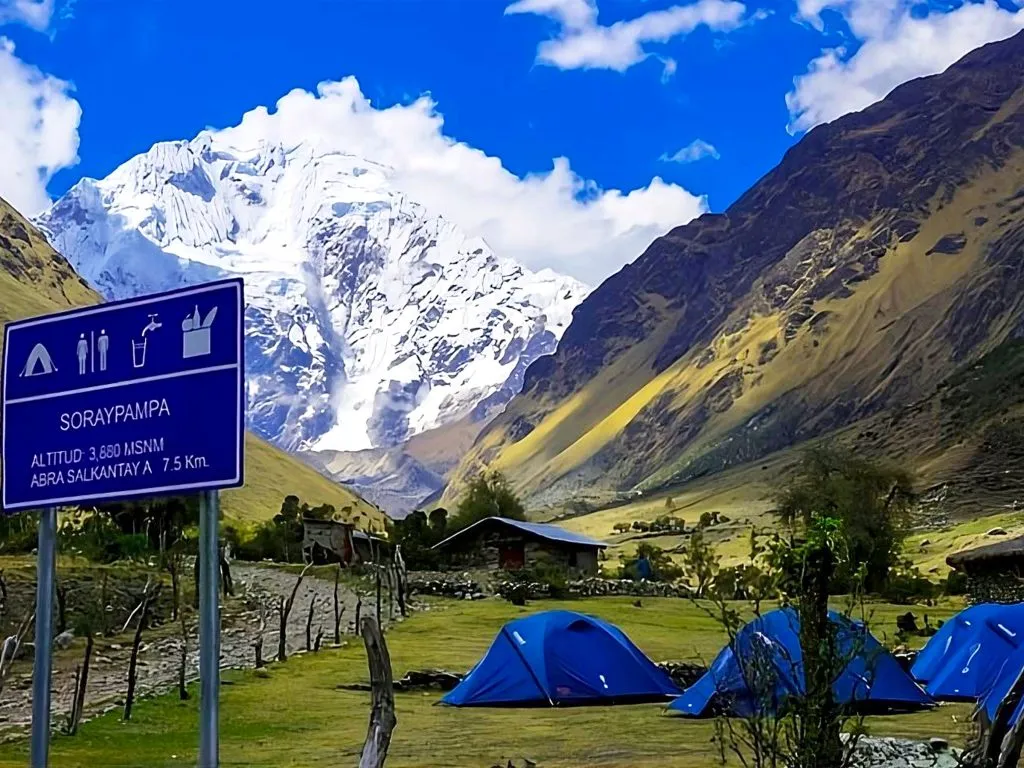
The trek typically spans approximately 64 to 74 kilometers (40–46 miles) over four or five days. The journey begins in the high-altitude alpine tundra of Soraypampa, where the air is thin and the scenery is dominated by glaciers. As you descend from the frigid Salkantay Pass, the landscape transforms dramatically into the “Ceja de Selva” (the eyebrow of the jungle). Within 48 hours, you move from snow-capped peaks to humid cloud forests filled with wild orchids, bromeliads, and organic coffee plantations. This rapid transition is what makes Salkantay trekking so unique—every morning brings an entirely new ecosystem to explore.
The Sky Lodge Salkantay: Sleeping Under the Stars
The most significant evolution in the trekking experience is the move away from traditional canvas tents toward high-end glamping. The Sky Lodge Salkantay has redefined the first-night experience at Soraypampa, turning a night in the mountains into a five-star astronomical event. These innovative geodesic domes are constructed from high-durability glass and weather-resistant materials, specifically designed to withstand the harsh Andean elements while providing a panoramic view of the universe.
Located at 3,900 meters (12,795 ft), where the air is remarkably clear and free from light pollution, these lodges allow you to view the Southern Cross and the Milky Way directly from your bed. While outside temperatures at Soraypampa can drop as low as -5°C (23°F), the domes are engineered to trap heat and provide thermal protection, ensuring a warm and restful night’s sleep. This level of comfort is a mechanical necessity for successfully conquering the grueling climb to the Salkantay Pass on the second day.
Preparing for Your 2026 Expedition
Because the Salkantay route reaches a higher maximum elevation than the Inca Trail, proper preparation is the difference between a transformative journey and a physical ordeal. It is vital to spend at least 2 to 3 days in Cusco (3,400m) prior to your trek. This allows your body to produce the necessary red blood cells to transport oxygen in the thin mountain air. Many travelers use these acclimatization days to explore the Sacred Valley, which sits at a slightly lower elevation, providing a gentle introduction to the altitude.
Regarding seasonal planning, the Dry Season (May – September) remains the peak time for trekking, offering blue skies and stunning views, but also the coldest nights. This is the busiest time for Sky Lodge Salkantay reservations, which often sell out months in advance. While the Inca Trail closes in February, the Salkantay remains open year-round. The rainy season (November – March) offers a different kind of beauty, with lush green landscapes and significantly fewer crowds, though hikers must be prepared for muddy conditions and occasional rain showers.
Conclusion
The Salkantay trekking experience represents the perfect marriage of ancient tradition and modern innovation. From the spiritual “Apus” that guard the pass to the futuristic glass domes of the Sky Lodge Salkantay, every element of the journey is designed to leave you in awe. Whether you are a solo adventurer seeking a challenge or a couple looking for the ultimate mountain sanctuary, Salkantay offers an unfiltered connection to the Andes that you will carry with you long after you reach the gates of Machu Picchu.
FAQ
How difficult is the Salkantay Trek compared to the Inca Trail?
The Salkantay Trek is considered more difficult. The maximum altitude is higher (4,630m vs. 4,215m), and the daily distances are generally longer. However, the lack of thousands of steep stone “Inca steps” makes it significantly easier on the knees during the long descents.
Do I need to book Salkantay trekking permits in advance?
Unlike the Inca Trail, there is no daily government cap on Salkantay trekkers. However, Machu Picchu entrance tickets and Sky Lodge Salkantay spots are limited and sell out quickly. It is highly recommended to book 3 to 4 months ahead for the peak season.
Are there bathrooms and showers at the Sky Lodges?
The Sky Lodges at Soraypampa typically feature shared, eco-friendly toilets designed for high-altitude environments. Some premium lodges on the later nights of the trek offer private bathrooms with hot showers, but the first night is generally focused on the stargazing experience with high-quality shared facilities.
Can I see Machu Picchu from the Salkantay Trek?
Yes. On Day 4 of the 5-day itinerary, if you take the route through the Llactapata archaeological site, you will have a stunning, distant view of the Machu Picchu citadel from across the Aobamba Valley.
What should I pack for the Sky Lodge?
Even with the protection of the dome, you need thermal layers. Pack a high-quality down jacket, thermal base layers, a headlamp for moving between the domes at night, and a portable power bank, as electricity in these remote camps is often solar-powered and limited to specific evening hours.