

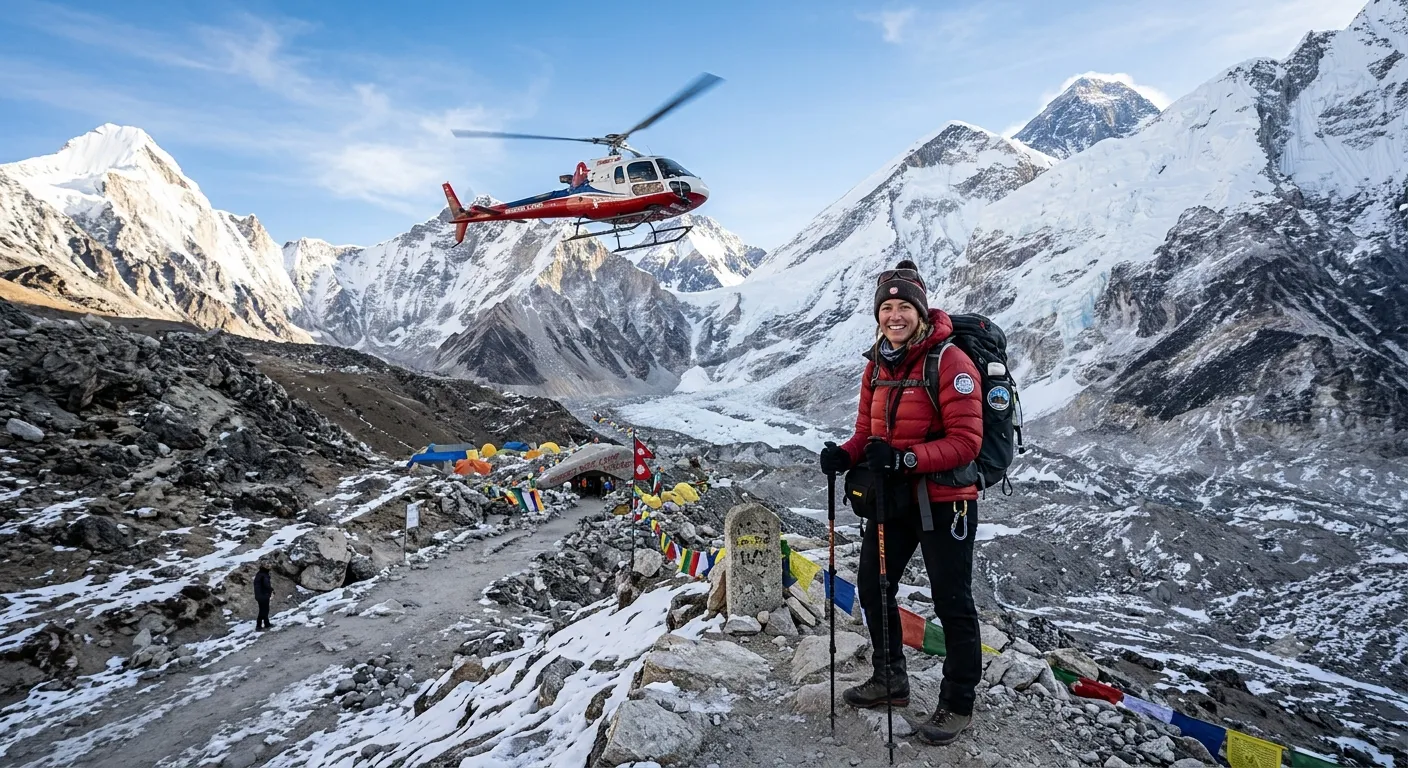

The Everest Base Camp Trek is one of the world’s most iconic trekking experiences, attracting thousands of adventure enthusiasts every year. Walking through the breathtaking Khumbu region, crossing suspension bridges, visiting ancient monasteries, and standing beneath the world’s highest mountain creates memories that last a lifetime. For travelers who want to experience the classic trek while saving time and enjoying a spectacular aerial journey, the Everest Helicopter Return Trek offers the perfect combination of adventure, comfort, and luxury.
This unique trekking experience allows hikers to trek all the way to Everest Base Camp before returning to Kathmandu by helicopter. Instead of retracing the same trail for several days, travelers enjoy a scenic helicopter flight over the Himalayas, providing unforgettable views of Mount Everest and neighboring peaks.
Why Choose the Everest Base Camp Trek?
The Everest region is famous for its dramatic mountain scenery, rich Sherpa culture, and legendary trekking routes. Every step of the journey introduces travelers to stunning landscapes, welcoming villages, and centuries-old Buddhist traditions.
Highlights of the Everest Base Camp Trek include:
-
Walking through Sagarmatha National Park, a UNESCO World Heritage Site.
-
Visiting the vibrant Sherpa town of Namche Bazaar.
-
Exploring the peaceful Tengboche Monastery.
-
Reaching Everest Base Camp at 5,364 meters.
-
Climbing Kala Patthar for one of the best panoramic views of Mount Everest.
-
Experiencing authentic Himalayan hospitality.
Unlike many mountain adventures, the Everest Base Camp Trek combines natural beauty with cultural immersion, making it suitable for photographers, nature lovers, and trekking enthusiasts alike.
What Is an Everest Helicopter Return Trek?
An Everest Helicopter Return Trek follows the traditional trekking route to Everest Base Camp but replaces the return hike with an exciting helicopter flight.
Instead of spending three to four additional days walking back to Lukla, trekkers board a helicopter from Gorak Shep or nearby after completing the trek. The helicopter flies over glaciers, valleys, and towering Himalayan peaks before returning to Kathmandu.
This itinerary allows travelers to experience both trekking and an unforgettable mountain flight in one package.
Benefits of an Everest Helicopter Return Trek
Save Valuable Time
A traditional Everest Base Camp Trek usually requires 12 to 14 days. Choosing an Everest Helicopter Return Trek reduces the overall duration by eliminating the return hike, making it ideal for travelers with limited vacation time.
Enjoy Spectacular Aerial Views
Few experiences compare to seeing the Himalayas from above. The helicopter flight offers incredible views of:
-
Mount Everest
-
Lhotse
-
Nuptse
-
Ama Dablam
-
Pumori
-
Khumbu Glacier
-
Khumbu Icefall
These breathtaking perspectives are impossible to experience during the trek alone.
Reduce Physical Fatigue
Descending from Everest Base Camp involves several long trekking days. While downhill walking is easier on the lungs, it can be demanding on the knees and ankles.
A helicopter return minimizes physical strain while allowing trekkers to complete the most rewarding section of the journey.
Luxury Meets Adventure
The Everest Helicopter Return Trek blends authentic trekking with premium travel. It is perfect for travelers who enjoy adventure but also appreciate comfort and convenience.
Everest Base Camp Trek Route
The classic trekking route generally follows this itinerary:
Day 1: Fly from Kathmandu to Lukla and trek to Phakding.
Day 2: Trek to Namche Bazaar.
Day 3: Acclimatization day in Namche Bazaar.
Day 4: Trek to Tengboche.
Day 5: Trek to Dingboche.
Day 6: Acclimatization in Dingboche.
Day 7: Trek to Lobuche.
Day 8: Trek to Gorak Shep and visit Everest Base Camp.
Day 9: Early morning hike to Kala Patthar followed by a helicopter flight back to Kathmandu.
This itinerary balances proper acclimatization with efficient travel planning.
Best Time for the Everest Base Camp Trek
Choosing the right season significantly improves the trekking experience.
Spring (March to May)
Spring is one of the most popular trekking seasons because of:
-
Mild temperatures
-
Clear mountain views
-
Blooming rhododendron forests
-
Stable weather
This season provides excellent photography opportunities and comfortable trekking conditions.
Autumn (September to November)
Autumn is considered the best season for both the Everest Base Camp Trek and Everest Helicopter Return Trek.
Benefits include:
-
Crystal-clear skies
-
Pleasant daytime temperatures
-
Dry trekking trails
-
Excellent visibility for helicopter flights
Winter (December to February)
Winter offers peaceful trails and fewer crowds. Although temperatures are colder, experienced trekkers can still enjoy spectacular mountain scenery.
Monsoon (June to August)
Heavy rainfall can affect flights and trail conditions. This season is generally less popular but rewards adventurous travelers with lush landscapes.
Difficulty Level
The Everest Base Camp Trek is considered moderately challenging.
Trekkers do not need technical climbing skills, but they should have:
-
Good physical fitness
-
Strong endurance
-
Positive mental attitude
-
Proper acclimatization
The biggest challenge is altitude rather than steep terrain.
Daily walks usually range between five and seven hours, with gradual elevation gain throughout the journey.
Altitude and Acclimatization
Altitude sickness can affect anyone regardless of age or fitness level.
Successful acclimatization includes:
-
Walking slowly.
-
Drinking plenty of water.
-
Taking scheduled rest days.
-
Avoiding alcohol.
-
Following your guide’s advice.
Proper acclimatization dramatically increases the chances of a safe and enjoyable trek.
Accommodation During the Trek
Most trekkers stay in traditional mountain tea houses.
Typical facilities include:
-
Comfortable twin-sharing rooms
-
Warm dining halls
-
Freshly prepared meals
-
Wi-Fi in selected villages
-
Charging facilities
-
Hot showers in larger settlements
As altitude increases, accommodation becomes simpler but remains welcoming.
Food on the Everest Base Camp Trek
Nutritious meals help maintain energy throughout the trek.
Popular menu items include:
-
Dal Bhat
-
Fried rice
-
Noodles
-
Pasta
-
Soups
-
Eggs
-
Pancakes
-
Tibetan bread
-
Momos
-
Tea and coffee
Many tea houses also serve vegetarian and vegan options.
Essential Packing List
Packing wisely improves comfort throughout the journey.
Recommended gear includes:
-
Waterproof trekking boots
-
Warm down jacket
-
Thermal clothing
-
Trekking poles
-
Sleeping bag
-
Gloves
-
Wool hat
-
Sunglasses
-
Sunscreen
-
Water bottle
-
Headlamp
-
Personal medications
-
Lightweight backpack
Layering clothing helps adapt to changing mountain temperatures.
Who Should Choose an Everest Helicopter Return Trek?
This itinerary is perfect for:
-
Busy professionals
-
Luxury adventure travelers
-
Families with limited time
-
First-time Himalayan trekkers
-
Couples seeking a memorable honeymoon adventure
-
Senior travelers with good fitness
The helicopter return offers a comfortable ending without missing the highlights of the trek.
Photography Opportunities
The Everest region provides endless opportunities for photographers.
Popular photography locations include:
-
Lukla Airport
-
Namche Bazaar
-
Tengboche Monastery
-
Ama Dablam viewpoints
-
Khumbu Glacier
-
Kala Patthar
-
Everest Base Camp
-
Helicopter flight over the Himalayas
Golden sunrise from Kala Patthar is widely regarded as one of the finest mountain photography experiences in the world.
Why Hire a Professional Guide?
Although experienced trekkers may navigate independently, hiring a licensed guide provides numerous benefits.
A guide helps with:
-
Navigation
-
Safety
-
Altitude monitoring
-
Local culture
-
Accommodation arrangements
-
Emergency assistance
Porters can also make the trek more enjoyable by carrying heavy luggage.
Responsible Trekking
Sustainable tourism helps preserve the beauty of the Everest region.
Responsible trekkers should:
-
Carry reusable water bottles.
-
Avoid single-use plastics.
-
Respect local customs.
-
Stay on marked trails.
-
Dispose of waste responsibly.
-
Support local businesses.
Small actions contribute to protecting the Himalayas for future generations.
Final Thoughts
The Everest Base Camp Trek remains one of the most rewarding adventures on Earth, offering dramatic mountain scenery, vibrant Sherpa culture, and the unforgettable achievement of reaching the foot of the world’s highest peak. By choosing an Everest Helicopter Return Trek, travelers enjoy all the excitement of the classic trek while finishing the journey with an extraordinary helicopter flight over the Himalayas. This combination of trekking and aerial sightseeing creates an experience that is both efficient and unforgettable.
Whether you are seeking adventure, breathtaking landscapes, cultural exploration, or a once-in-a-lifetime Himalayan journey, the Everest Base Camp Trek with an Everest Helicopter Return Trek delivers an exceptional travel experience that will remain with you forever.